lip
20
Amazing Champ…at 11!
Christopher Yoo. California state champion! pic.twitter.com/ihshzvx3y8— New York Chess (@NewYorkChess) 10 września 2018




Amazing Champ…at 11!
Christopher Yoo. California state champion! pic.twitter.com/ihshzvx3y8— New York Chess (@NewYorkChess) 10 września 2018
to tytuł artykułu czołowego historyka polskich szachów Tomasza Lissowskiego i jednocześnie przewodniczącego Komisji Historycznej PZSzach, na stronie Polskiego Związku Szachowego: link.
Przypominam, że w 2004 roku ukazała się książka o tym sukcesie (2 wydanie w 2008 roku) wydawnictwa INTEGRACJA, Gorzów Wlkp.

IM Anthony Saidy, portrayed by @davidllada pic.twitter.com/QN3QkHyPdw
— Bay Area Chess (@bayareachess) 2 stycznia 2019
Gmi Igor Rausis cheating in the toilet. He should be banned from the chess world! pic.twitter.com/iYRygNE6re
— LeLapinRougeEAG (@RougeEag) 13 lipca 2019
Po ukazaniu się 15 stycznia 2015 roku wpisu Problemy szkoleniowe w polskich szachach (41),
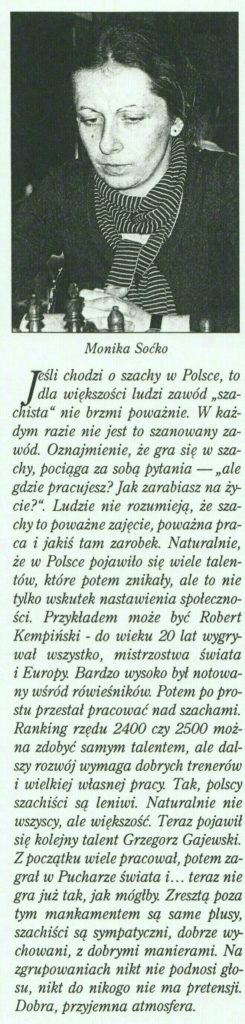
w którym zacytowałem m.in. ocenę najlepszej polskiej arcymistrzyni Moniki Soćko o polskich szachistach:
Ranking rzędu 2400 czy 2500 można zdobyć samym talentem, ale dalszy rozwój wymaga dobrych trenerów i wielkiej własnej pracy. Tak, polscy szachiści są leniwi. Naturalnie nie wszyscy, ale większość.
otrzymałem od kilku Internautów zapytanie, skąd wziąłem tę informację? Zaproponowano mi podanie źródła w celu udokumentowania wiarygodności tej wypowiedzi.
Długo to trwało, ale w końcu znalazłem kopię artykułu w moim archiwum.
Został on opublikowany w Magazynie SZACHISTA (czerwiec 2009) w dziale O tym się mówi…
Wywiad z naszą arcymistrzynią na dwie rundy przed końcem kobiecych ME w Petersburgu, w marcu 2009 roku, przeprowadził znany dziennikarz Ilja Odesski.
To jest fragment artykułu:
The FIDE Grand Prix organized by World Chess in Riga welcomed a very special guest at the start of the tie-break matches on Wednesday. Football legend Māris Verpakovskis kicked off the day by playing 1.d4 in the game between Shakhriyar Mamedyarov and Jan-Krzysztof Duda. The Azeri Grand Master was delighted to see the star who had spent two seasons at the FC Baku.
This first rapid game was rather shaky, as Mamedyarov got a significant advantage before blundering inexplicably with 29.h5. Two pawns were gone, but Duda’s king proved vulnerable enough for white to reach a draw by perpetual check. The Pole started the second encounter in typical “Mamedyarov style”, by pushing his g pawn very early on. Indeed, the Azeri has won several brilliant games in different openings with the idea Rh1-g1, followed by g2-g4-g5. Was this strategy too provocative from Duda? His opponent commented afterwards that he knew precisely how to react, and that the key was not to be scared of the white attack. Mamedyarov simply centralized his forces, convincingly repelled the aggressive attempts of his opponent, and cashed in the whole point to qualify to the semi-final.
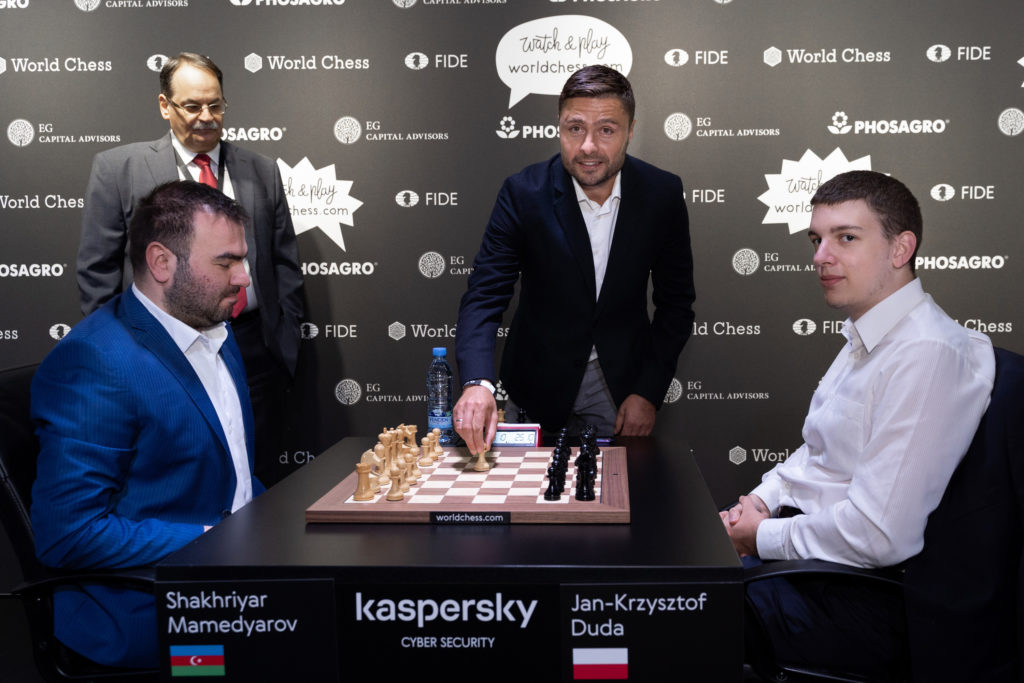
Źródło: Text by Press Officer Yannick Pelletier; Photo courtesy: World Chess
Jedyna porażka!
Runda 2 (baraże):
So – Karjakin 3,5 – 2,5
Mamedyarov – Duda 1,5 – 0,5
Yu Yangyi – Grischuk 0,5 – 1,5
//////////////////////////////
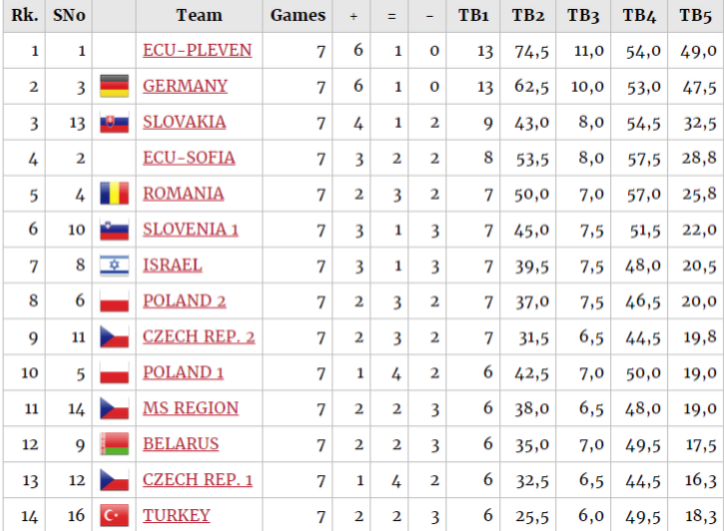
W dniach 10-18.07.2019 w Pardubicach odbyły się Drużynowe Mistrzostwa Europy Juniorów.
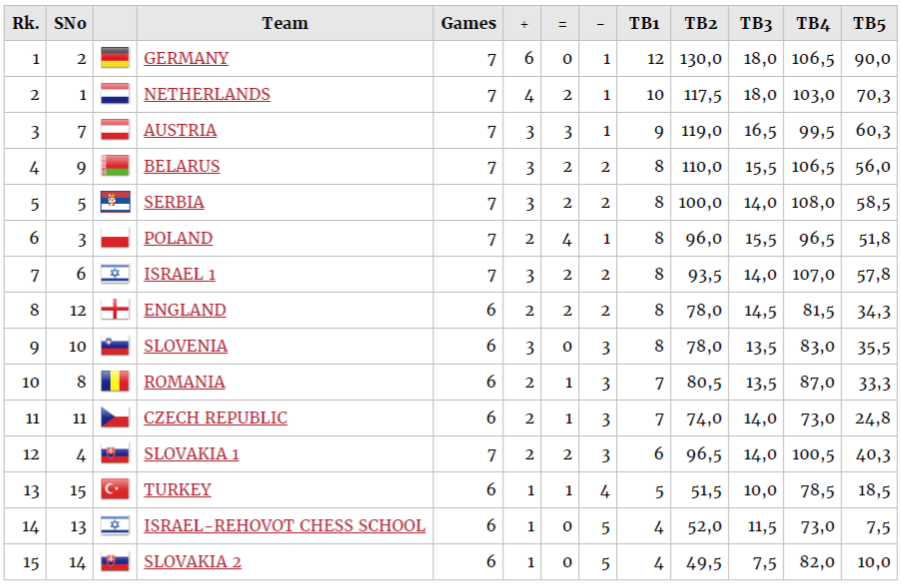
Polska zdobyła dwa złote medale w grupach do lat 12!
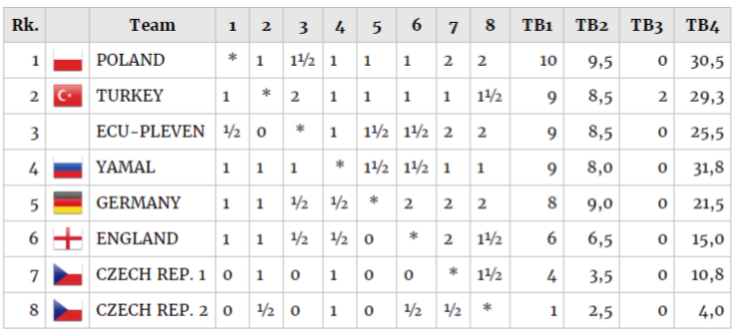
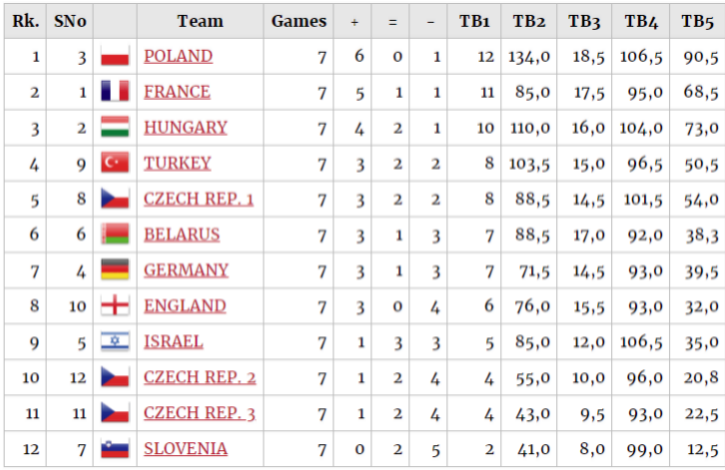
Gorzej powiodło się drużynom do lat 18.
2019 Tal Memorial Rapid frontrunners:
?Vladimir Fedoseev (RUS)
?David Navara (CZE)
?Rasmus Svane (GER)https://t.co/BGTccAcD77? by Zane Bitere, Paula Čurkste (LETA)#Šahs #chess #MikhailTal #CocaCola #FIDE #Riga #rapid #blitz pic.twitter.com/2CJKXp2kTc
— International Chess Federation (@FIDE_chess) 17 lipca 2019
The game between Shakhriyar Mamedyarov and Jan-Krzysztof Duda bore definite similarities to their encounter of the day before. Black treated the opening rather passively and White obtained a large space advantage. The critical moment occurred when the Azeri decided to bring his knight to c6, thus forcing his opponent to exchange it. A far-advanced passed pawn appeared on this square that looked like a thorn in black’s position. But Duda defended resourcefully, first by solidly blockading this pawn, then by pushing his own pawns on the queenside. As he admitted after the game, he was relieved to finally play some active moves and understood that his position was in fact quite resilient. After some more attempts, a visibly disappointed Mamedyarov offered a draw. In the post-match interview, Duda felt that his chances were probably higher at rapid and blitz than in classical. The tie-break is likely to be heated.
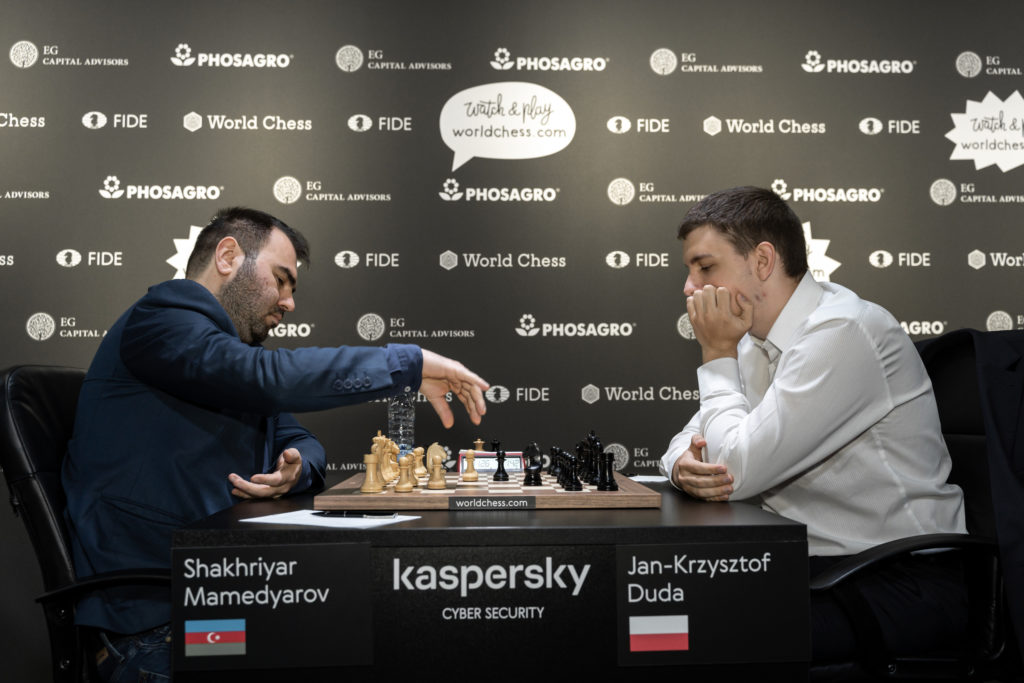
Źródło: Text by Press Officer Yannick Pelletier; Photo courtesy: World Chess
Runda 2
So – Karjakin ½ – ½ (1 – 1)
Mamedyarov – Duda ½ – ½ (1 – 1)
Yu Yangyi – Grischuk ½ – ½ (1 – 1)
Vachier-Lagrave – Topalov ½ – ½ (1,5 – 0,5)